Time for an update on Brigade 3 and what we've been working on: until now, we have mostly shown scenes with limited materials, i.e. either perfectly diffuse or perfectly specular surfaces. The reason we didn't show any glossy (blurry) reflections so far, is because these generate a lot of extra noise and fireflies (overbright pixels) and because the glossy material from Brigade 2 was far from perfect. Over the past months, we have reworked the material system from Brigade and replaced it with the one from OctaneRender, which contains an extraordinary fast converging and high quality glossy material. The sky system was also replaced with a custom physical sky where sky and sun color vary with the sun position.And there's a bunch of brand new custom post effects, tone mapping filters and real camera effects like fish eye lens distortion (without the need for image warping).
We've had a lot of trouble finding a good way to present the face melting awesomeness that is Brigade 3 in video form and we've tried both youtube and Vimeo at different upload resolutions and samplecounts (samples per pixel). Suffice to say that both sites have ultra shitty video compression, turning all our videos in a blocky mess (although Vimeo is still much better than YT). We also decided to go nuts on glossy materials and fresnel on every surface in this scene, which makes everything look much a lot more realistic (in particular fresnel, which causes surfaces to look more or less reflective depending on the viewing angle), but the downside of this extra realism is a lot of extra noise.
So feast your eyes on the first videos of Brigade 3 (1280x720 render resolution):
Vimeo video (less video compression artefacts): https://vimeo.com/77192334
Youtube vids: http://www.youtube.com/watch?v=aKqxonOrl4Q
Vimeo video (less video compression artefacts): https://vimeo.com/77192334
Youtube vids: http://www.youtube.com/watch?v=aKqxonOrl4Q
Another one using an Xbox controller:
The scene in the video is the very reason why I started this blog five years ago and is depicted in one of my very first blog posts from 2008 (see http://raytracey.blogspot.co.nz/2008/08/ruby-demo.html). The scene was created by Big Lazy Robot to be used in a real-time tech demo for ATI's Radeon HD 4870 GPU. Back then, the scene used baked lightmaps rendered with V-Ray for the diffuse lighting and an approximate real-time ray tracing technique for all reflective surfaces like cars and building windows. Today, more than five years later, we can render the same scene noise free using brute force path tracing on the GPU in less than half a second and we can navigate through the entire scene at 30 fps with a bit of noise (mostly apparent in shadowy areas). When I started this blog my dream was to be able to render that specific scene fully in real-time in photoreal quality and I'm really glad I've come very close to that goal.
UPDATE: Screenshot bonanza! No less than 32 screenshots, each of them rendered for 0.5 - 1 second. The problem with Brigade 3 is that it's so much fun mucking around with the lighting, the time of day, depth of field and field of view with lens distortion. Moreover, everything looks so photoreal that it's extremely hard to stop playing and taking screenshots. It feels like you're holding a camcorder.


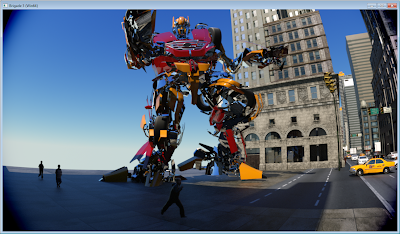


UPDATE: Screenshot bonanza! No less than 32 screenshots, each of them rendered for 0.5 - 1 second. The problem with Brigade 3 is that it's so much fun mucking around with the lighting, the time of day, depth of field and field of view with lens distortion. Moreover, everything looks so photoreal that it's extremely hard to stop playing and taking screenshots. It feels like you're holding a camcorder.


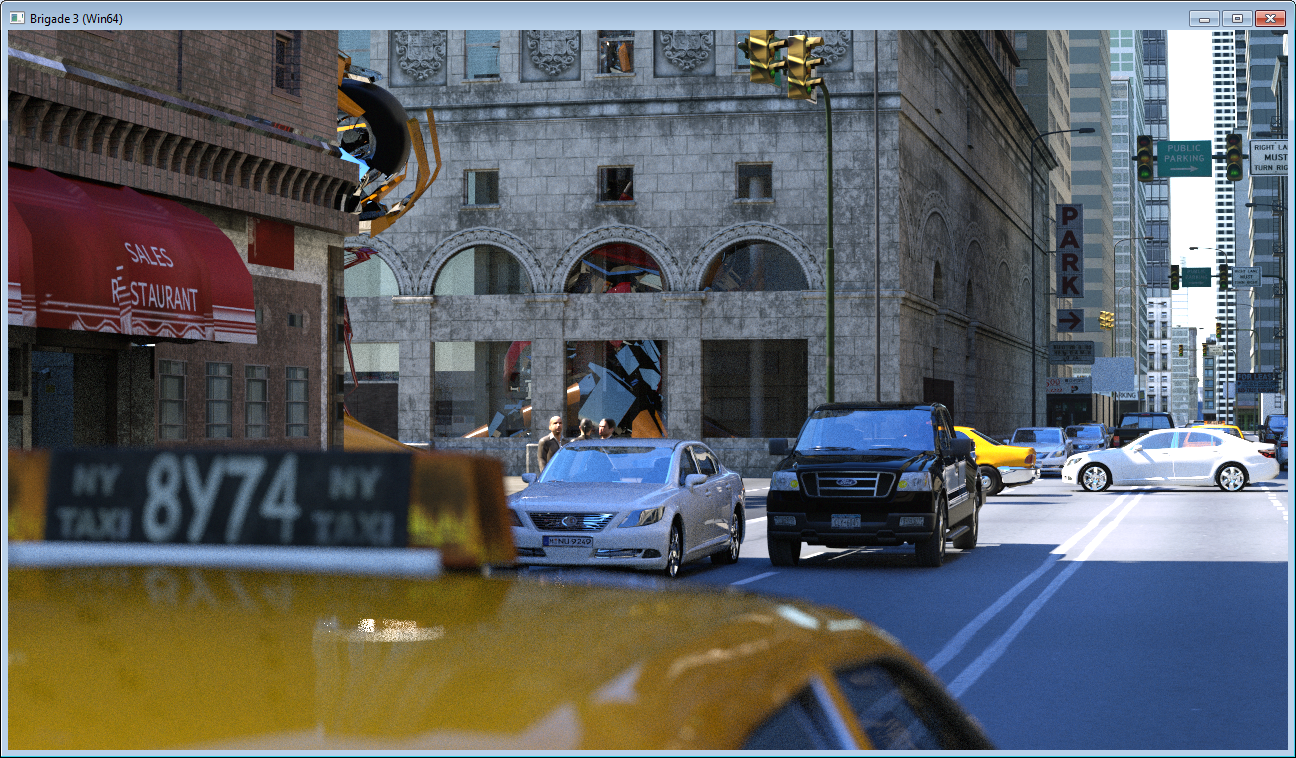


We plan to show more videos of Brigade 3 soon, so stay tuned...
Update: I've uploaded the direct feed version of the second video to MEGA (a New Zealand based cloud storage service, completely anonymous, fast, no registration required and free, just excellent :). You can grab the file here: brigade3_purely_random_osumness (it's 2.40 GB)
Update 2: The direct feed version of the first video can be downloade here: brigade3_launch_vid_HD.avi (2.90 GB). This video has a higher samplecount per pixel per frame (and thus less noise and lower framerate).
Update: I've uploaded the direct feed version of the second video to MEGA (a New Zealand based cloud storage service, completely anonymous, fast, no registration required and free, just excellent :). You can grab the file here: brigade3_purely_random_osumness (it's 2.40 GB)
Update 2: The direct feed version of the first video can be downloade here: brigade3_launch_vid_HD.avi (2.90 GB). This video has a higher samplecount per pixel per frame (and thus less noise and lower framerate).


